By Lauren Spain, Vice President of Student Affairs
When you picture a leader, who do you see? Maybe it is the loudest person in the room, the person who always volunteers first, or someone who seems completely comfortable speaking in front of a crowd. But leadership does not belong to one shade, one personality type, or one way of showing up. Some of the strongest leaders are not the biggest talkers. They are the biggest listeners.
Student leadership matters because communication is one of the most important tools we have. When you learn how to communicate with people who bring different personalities, energies, backgrounds, and cultures into a space, you become better equipped to share ideas and create solutions. You also learn more because you are in the room where things happen. You hear people’s stories. You see their struggles. You begin to understand experiences beyond your own.
We live in a culture that can be quick to oppose or dismiss something until it happens to us. Leadership teaches us to pause and understand first. It asks us to listen before reacting, consider who may be affected, and recognize that we will not always have the full story when we enter a conversation.
Leadership creates momentum
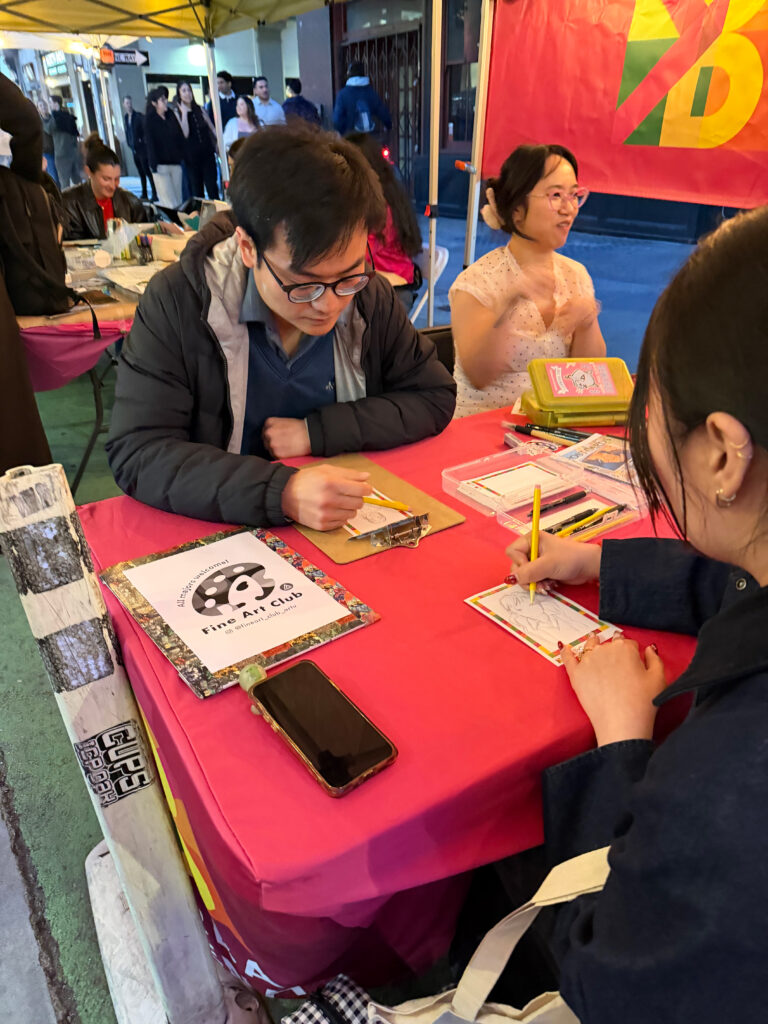
I have seen what happens when students realize their ideas can make a real difference. One group of Fine Art student leaders cared deeply about improving the experience of their community. They advocated for something as practical as paper towel dispensers. They helped launch a club, created videos of student work, and built momentum around the work their peers were producing. In April, they participated in San Francisco’s Downtown First Thursday event, creating live quick sketches of attendees and bringing their talents directly into the community.
That work was not driven by one person alone. It happened because a group of students recognized opportunities, listened to one another, and kept moving their ideas forward. That is what leadership can look like. It can be a large public event, a new student organization, a better way to showcase creative work, or a small improvement that makes everyday life easier for the people around you.
Four ways to lead
Student Representatives serve as a voice for their peers and a bridge between students and university leadership. They gather feedback, help students find resources, and bring concerns and ideas into conversations where decisions and solutions can take shape. For Christian Robinson, who serves as the MFA Game Development Student Representative, the role is also a way to strengthen connections across distance. “I like being a student rep because, as an online student, it gives me a way to better connect with my peers and help make a positive impact on the university.” Representatives serve for one academic year. Students may be recommended by their department or self-nominate by contacting their department administrator at the beginning of the fall semester.
Peer Mentors are accountability partners who are students themselves. They get it. They understand how overwhelming it can feel to manage responsibilities, ask for help, or figure out whom to contact. Because they have been there, they can relate to what another student is experiencing and connect that student with people and resources that can help. Students interested in becoming Peer Mentors should complete the FAFSA, confirm that they qualify for Federal Work-Study, and contact Campus Life.
Selected by the students in their respective organizations, club leaders create the spaces they want to see. They bring students together around shared creative, cultural, professional, or social interests and help turn a common idea into a community. Students can join an existing club or propose a new one at any time by developing a mission, identifying planned activities, finding a faculty advisor, and working with Campus Life to get started.
Resident Assistants build community where students live. The role includes serious responsibility, but it is fundamentally about people. RAs learn to listen, remain calm, assess what someone needs, connect residents with appropriate resources, and follow up afterward. They do not need to solve every problem alone. Strong leadership also means knowing when to ask for support and how to help someone reach the right person. Students interested in RA opportunities can contact Housing and Residence Life.
Take the first step
You do not need to be an extrovert to lead. One of the most trusted Peer Mentors I have worked with was quiet and deeply introverted. Students trusted her because she listened, understood, and made them feel comfortable asking for help. Her impact did not come from commanding a room. It came from creating a space where someone else felt heard.
If you care about your community, want to support other students, or see something that could be better, leadership may already look more like you than you realize. You do not have to wait until you feel completely ready. Start by asking a question, sharing an idea, or learning more about an opportunity.
To learn about Student Representative, Peer Mentor, or club leadership opportunities, email campuslife@academyart.edu. To learn about Resident Assistant opportunities, email housing@academyart.edu. You may already be more ready to lead than you think.