By Kirsten Coachman
As artists, when working on a new project, we hope to see it come to fruition as envisioned. To share our creativity, our story, for an audience to take in. But what happens when it feels like the goalposts keep getting moved? For Hayley Kiyoko, it meant venturing into different creative avenues to tell her story until she could finally bring it to the big screen last weekend.
“Girls Like Girls” is a sapphic story of young love centered on Coley (newcomer Maya da Costa) and Sonya (Myra Molloy, “Untamed”), who over the course of a summer navigate their shared spark like only teenagers can—awkwardly, sometimes painfully, while overanalyzing every shared word and moment. Cinematically stunning, the film is a relatable depiction of the universal experience of having a new crush while coming into your own as a young person.
Dubbed “Lesbian Jesus” by her fans, Kiyoko, a singer-songwriter, actress, best-selling author, and now feature film director, began this journey back in 2015 when she released the single, “Girls Like Girls,” off of her EP “This Side of Paradise.” The subsequent music video was fans’ initial introduction to the characters of Coley and Sonya. Co-directing the music video alongside Austin S. Winchell, it includes beats pulled directly from the multi-hyphenate’s personal experiences.
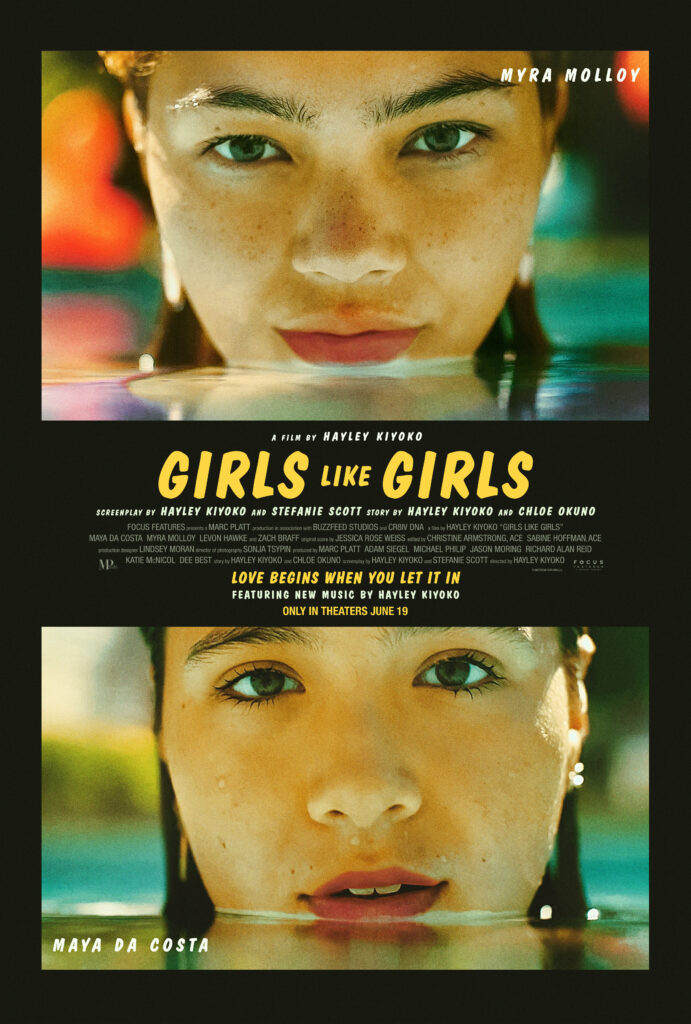
With the continued success of her music and selling out tours worldwide in support of her albums, “Expectations” (2018) and “Panorama” (2022), Kiyoko expanded the world of Coley and Sonya in her 2023 debut young adult novel, “Girls Like Girls.” It hit the New York Times Best Sellers list, and her follow-up novel, 2025’s “Where There’s Room For Us,” also hit the Best Sellers list. Throughout it all, “Girls Like Girls” the film was still top of mind.
Kiyoko adapted the script from her novel alongside writer and actress Stefanie Scott (“Insidious: Chapter 3”), and in 2023, found a producer in Marc Platt (“La La Land”) and Marc Platt Productions. Last weekend, “Girls Like Girls” came full circle, as Kiyoko’s film opened in theaters.
“I’m feeling excited,” said Kiyoko about her film making its way into theaters. “I think up until now, I felt a lot of pressure from myself because it’s been a 10-year journey. I want people to feel seen and represented. I want to do the best job that I possibly can. And so it’s been a very intense decade, but I’m really excited for people to finally get to see themselves represented on the big screen. If I keep going back to my 16-year-old self, being able to buy tickets and seeing a movie like this, it would’ve completely altered my brain chemistry and how I viewed my worth.”
In addition to the film, Kiyoko released a companion album earlier this month, “girls like girls the album,” which features not just songs from the film, but new tracks from the artist as well.
Art U News sat down with Kiyoko last week during “Girls Like Girls’” San Francisco press stop to discuss the journey of the song to the screen, introducing da Costa to film audiences, and her advice to students on the importance of perseverance in pursuing their goals.
Going back to the beginning, we have a song, and then we have a music video, and then we have a best-selling book, and now we have a film. I think some of that speaks to this project being able to stand the test of time already. It also speaks to the connection that you have with your audience. What would you attribute the continuing success of this creative spark that started a decade ago?
Thank you. I think it’s wild when you list it all in a row, but like every time you list it out, it is a time capsule of a pivot for me. You know, writing the book, which I had never done before, was my Hail Mary because the movie wasn’t getting made. And then the book success led me back to the movie. And so all these moments in my life, in my career, music, led me to directing. It’s just been about survival and getting our stories out there. And I truly believe that if we had accessibility to our own stories in mainstream in a real way, to be able to go to a library, go to a movie and see ourselves, the world would be a better place. And so that’s just been kind of like my motivation throughout it all.
I think I’ve been behind every medium. It is all of me. I know what it’s like to feel othered. I know what it’s like to go through this yearning experience and process of not loving myself, going from releasing a song, hoping that I was manifesting that I was confident in who I was, to now being confident in who I am, waving the rainbow flag on stage. And so it’s been an entire decade of connecting closer to myself and healing parts of who I am.
Definitely an impactful decade. Reading the book and seeing the film, there have been some changes.
Yeah.
How was the adaptation process for you and how did you decide what was going to make the final cut onscreen?
I have a massive perspective on why books and movies are so different. You know, when you are reading a book, the author is able to basically dictate and tell you how that person feels. And when you’re directing a movie, you have 90 minutes to show that entire journey. So the book and the movie are sisters, but they’re totally different experiences. And I’m very proud of that, because I did that book over three years ago or four years ago, even. And so then, as the creative constantly following the evolution of this IP, you wanna challenge yourself to go further and deeper. You wanna try something new.
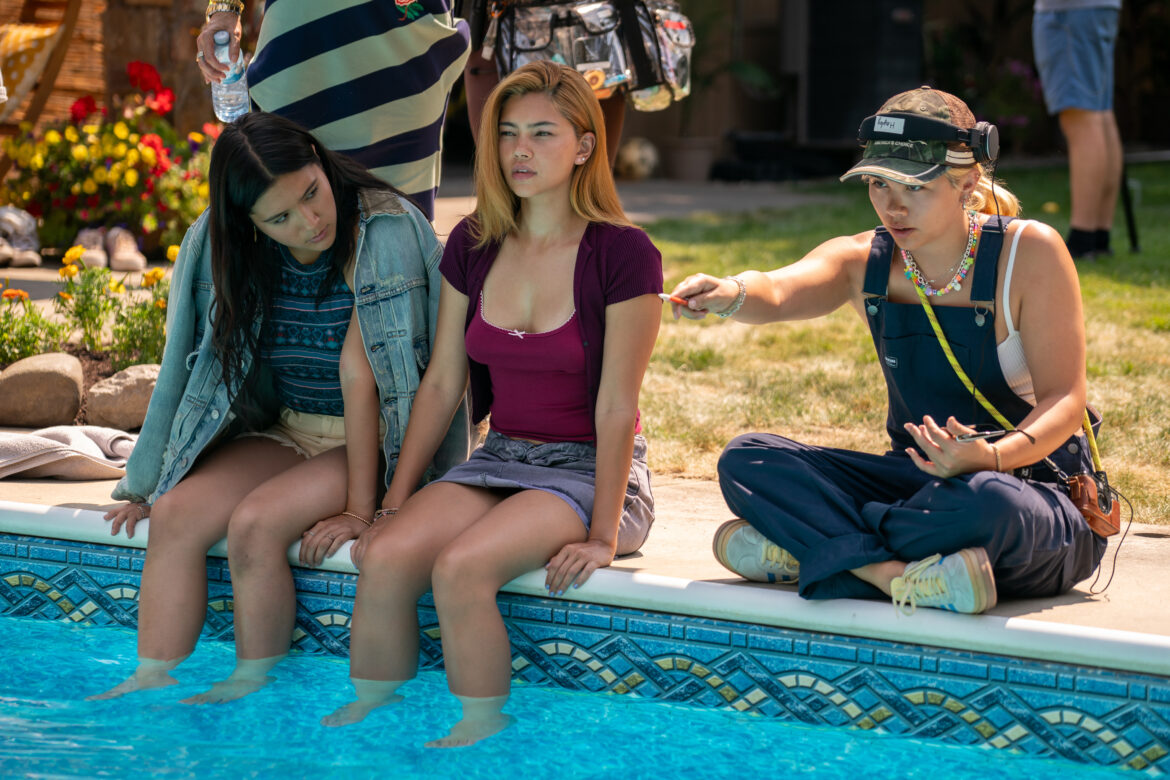
When directing this film, I wasn’t able to follow Sonya to dance camp. I wasn’t able to do all these things, and I was bummed at one point. ‘Cause gosh, if I had an unlimited budget, I’d be able to really flesh this all out. What happened is it challenged me to keep this film really simple, and really boil this crystal down to the very core of what it is like to fall in love, to navigate young love when everything in life feels like life or death. The stakes are immensely high. And so, simplifying the story is actually really hard. And I am so proud of how simple the story is.
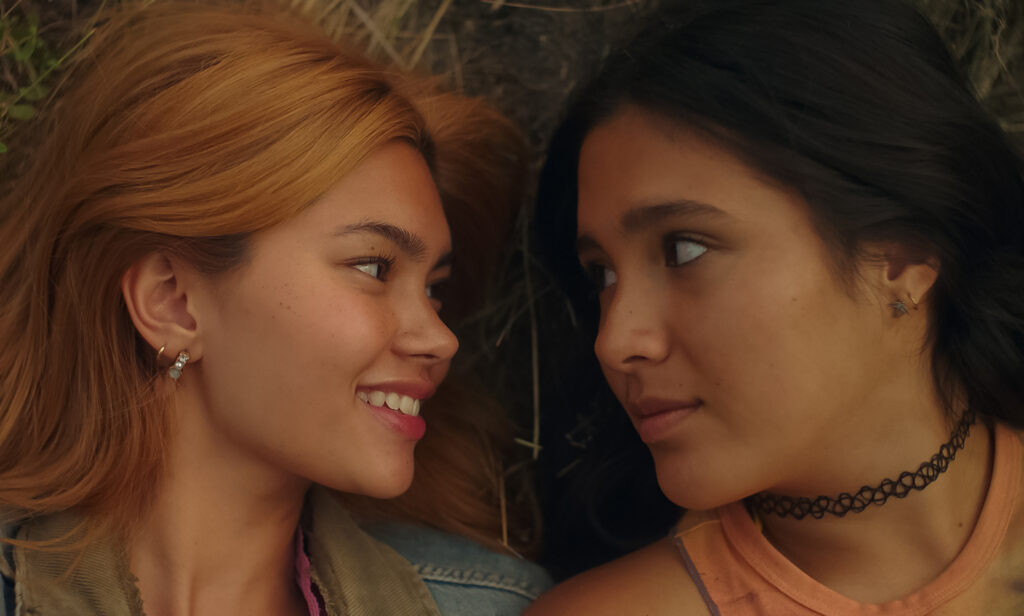
You know, I sometimes hear people say, ” Oh, I’ve seen this story before.” And I do feel like that’s kind of a privileged perspective because as sapphic women, we haven’t seen this story before. And I think it shows how far the heteronormative narrative has gone in cinema and how far behind sapphic women and sapphic stories are. You can’t name 10 movies with classic tropes, and love, and ending, and hope. And to be able to buy a ticket and see it in theaters, you can’t, off the dome. So I think that the simplicity of this film is actually what makes it so powerful and meaningful to so many of us. Because so many of us can see different parts of our experiences through the eyes of Coley and Sonya.
I know that this film was extremely personal to you and your own story. How was the casting process, and making sure you found the right actors to portray Coley and Sonya?
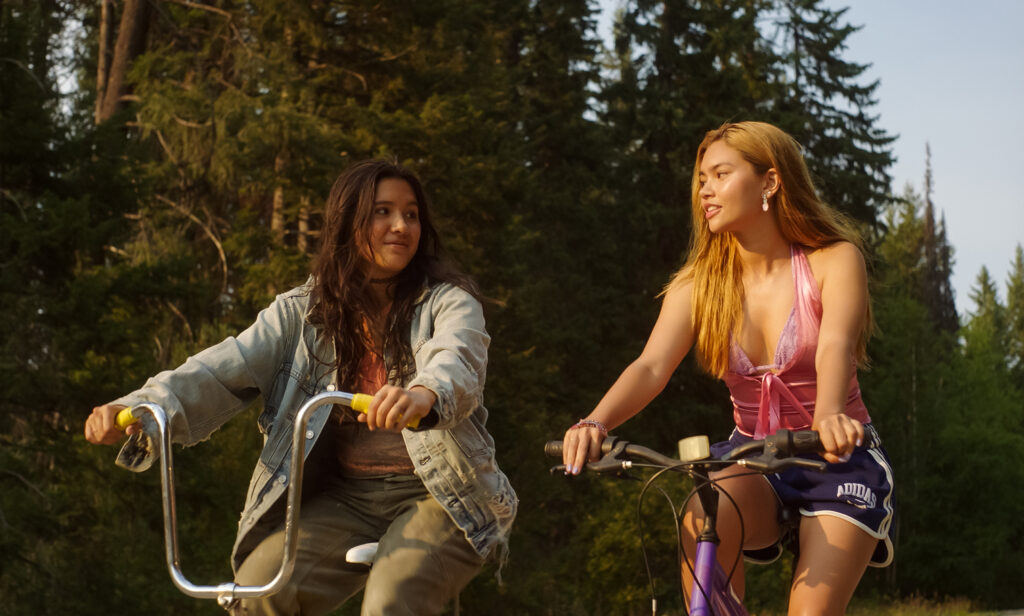
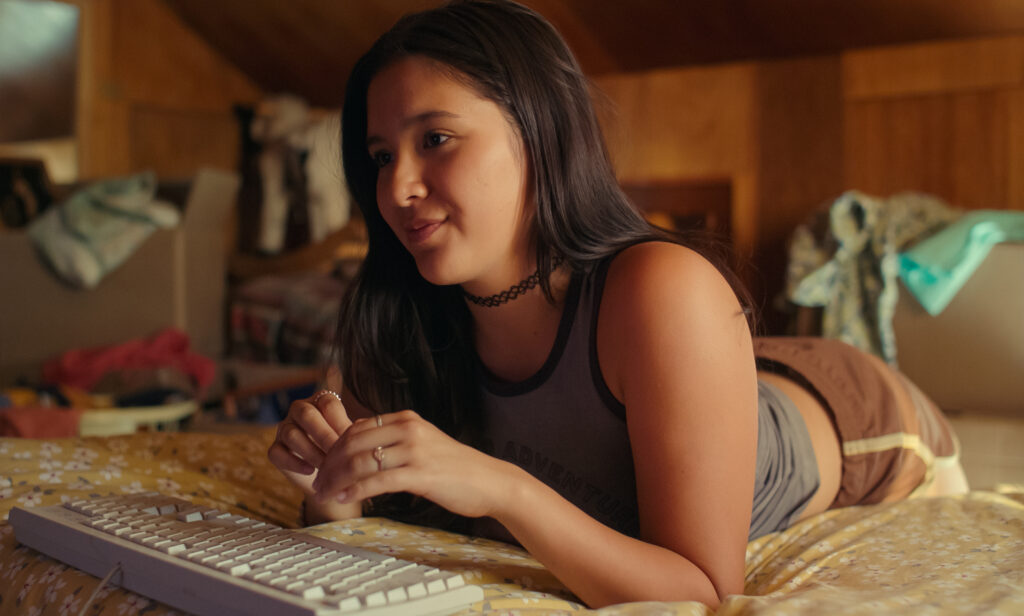
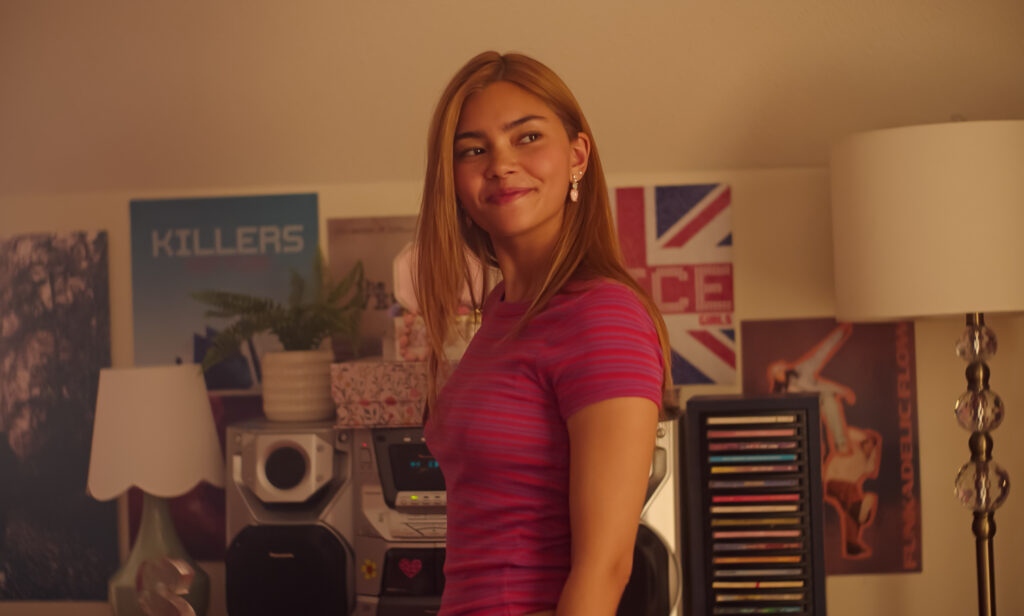
It was so exciting, ’cause you just don’t know. You are like, “What am I looking for? Who am I looking for? What do they look like? Where do they come from?” We had over 4,000 auditions sent in, and the very first audition I watched was Maya da Costa’s self-tape, which was wild because I remember watching it and being like, “Gosh, she’s so normal and quirky and awkward.” And it just brought me immediately back to that moment of being in my crush’s room and the vulnerability of that. And she was definitely the one to beat. And then, Myra Malloy, who auditioned for Coley initially, I brought her back for Sonya. And then we did a chemistry read with different pairings. And I remember they were doing the parking lot scene, and I forgot I was in the audition room. I felt like I was watching the movie, and I got really excited, and I’m so proud of their performances. These are not easy performances to do, to navigate. They support each other so well. They have incredible chemistry. And it was so special. You know, one of the scenes I actually lived through was the jean jacket scene when she goes to get the jean jacket from Sonya’s house. Like, I lived that. So it was such an out-of-body experience to be directing Maya to go through this trauma that I had lived through.
Oh, that’s wild. As soon as I saw Sonya take off in that jacket, I knew it would need to be retrieved at some point… I wanted to talk about Maya a little bit because it’s not just your feature film directorial debut; it’s her feature film debut as an actor. And what does that mean to you to be able to introduce her to a film audience and showcase her talent on screen?
It means the world. All we hope is to have an opportunity in a space to see ourselves as main characters. And I would’ve dreamed of being in a film like this when I was younger, and I am so honored to be able to create that space for her to grow up seeing herself as a main character, as a lead, as someone whose story and voice is important. I’m so proud of the performance that we were able to accomplish. I’m so proud of just the world being able to see who Maya da Costa is. I feel I have like a nurturing mother relationship with her. Because she was 18 when we shot this movie. So you also have to remember it’s a 23-day shoot. It’s very intense. And it was very important to also create a safe space for her to be able to explore this character and perform at the highest level.
Absolutely. When the credits started rolling, and it said “introducing,” I was like, “No way, it’s your first movie!?”
Yeah.
I couldn’t believe it. I thought both of your leads were fantastic.
Thank you.
One of the things that I really enjoyed about the film was the use of AIM (AOL Instant Messenger), showing the actual chat boxes on a computer, and watching Coley be nervous to see Sonya online. I was sitting there, like I’ve been there, I get it. You hear that door open, and you’re waiting. It really captures the anticipation. How did you approach showing these interactions on screen?
I mean, those are some of my favorite scenes. When Coley’s just sitting in her room waiting for Sonya to AIM her, it’s so intimate, and it’s so silent, and it reminds me of my experience. Falling in love with a girl was very silent. I wasn’t sharing it with anyone; I was just waiting around for a message back. And so it became such an intimate part of the film of navigating, not knowing how the other person feels. So it was really important to keep it as authentic as possible. I’m really proud of those beats in the film.
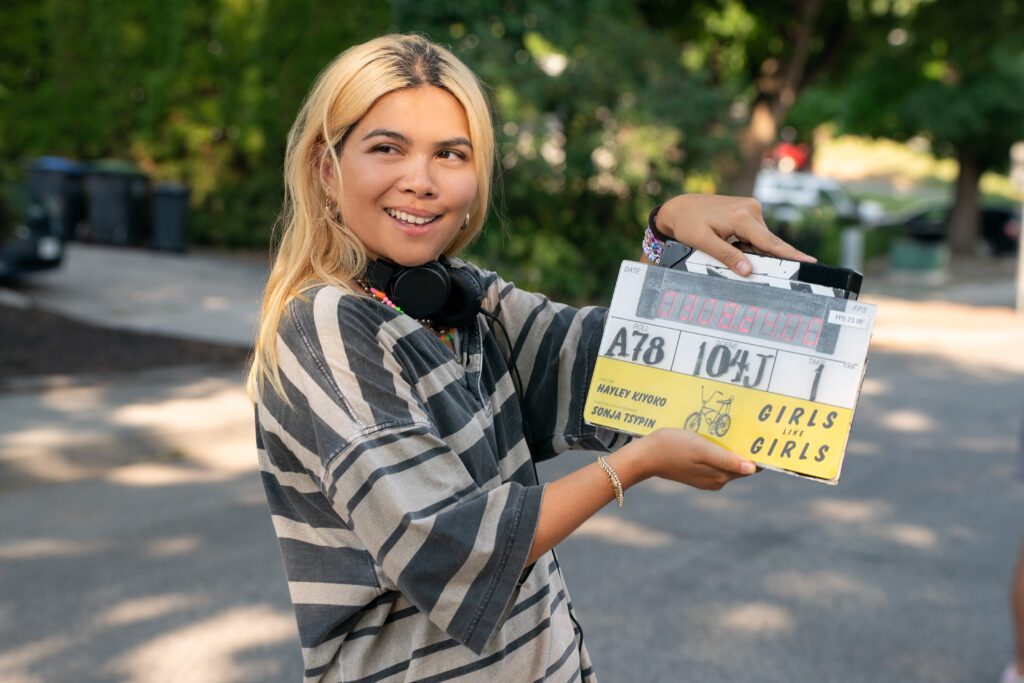
Is there something that you learned from the process of this being your first feature film as a director? I can’t believe you shot this in 23 days—was there something that you took from making the film that you look forward to applying to future projects?
Oh my gosh. I have a massive list of all the things that I learned that one day I’ll be able to share. I’m so grateful for this experience. I learned so much. I can’t wait to direct more. My dream is to continue to direct films and television shows and be able to write companion albums alongside [them]. I loved the idea of being able to go see a movie and then come home and listen to an album with 10 extra songs that aren’t even in the film to create and extend the experience of the universe. So I learned a lot, and what I have learned as well is I love working with young, new talent. It was so exciting to be a part of that journey with them. And I hope I get to continue to create spaces for new and up-and-coming talent.
At the Academy, we have various tracks in art, including filmmaking, and as an artist, you’ve demonstrated that you know how to persevere. What advice would you give young artists and creatives about the importance of perseverance as they pursue their own creative dreams and goals?
Thank you. I think about every moment I wanted to give up and throw in the towel, and had I given up, I wouldn’t be here. And sometimes it takes five years, sometimes it takes 10 years. I also encourage artists, when you’re banging down doors, and they’re constantly saying no, maybe try another building, you know? There were many pivots in my life, from music to directing to writing. I didn’t stop trying to share my voice and my story, no matter what the medium was. So I also encourage people, if something isn’t working, it doesn’t mean you should stop. Just try a different door, try a different building. Try a different way that maybe you haven’t thought about before. Something that you can control, ’cause there’s only so much we can control when you’re not financing films. But you can control the output of your art, the quality of it, and when you do that.
“Girls Like Girls” is now playing in theaters. | This interview has been edited for length and clarity.